Most "broken" AC units aren't broken at all. After 30 years of service calls across Staten Island and NYC, these are the culprits behind nearly every "my AC stopped working" call.
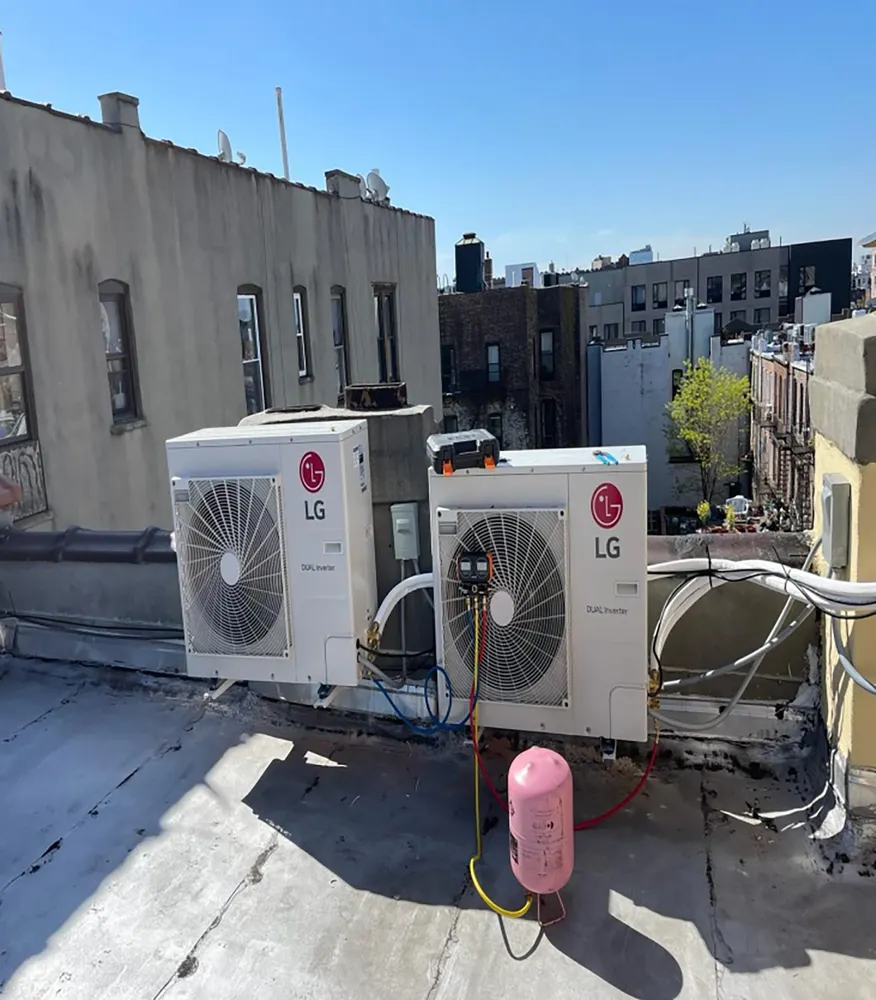
The first hot week of summer is our busiest of the year. And every year, a big share of those emergency calls end the same way: the system wasn't broken — it was neglected, clogged, or set up wrong. Here's what's usually going on.
The single most common cause, and the easiest to fix. A filter packed with dust chokes airflow, so the system runs and runs but barely moves cool air. If you can't remember the last time you changed it, that's your answer. Here's how often you should really change it.
Your outdoor unit dumps heat into the air outside. When its coils are coated in city grime, pollen, and cottonwood fluff, it can't shed heat — so the air inside never gets truly cold. In NYC, coils need a wash at least once a season.
Refrigerant isn't fuel — it doesn't get "used up." If your system is low, it's leaking. A company that just recharges it every summer without finding the leak is selling you the same repair twice. Insist on a leak check.
The capacitor gives your compressor its starting kick. When it weakens — very common after a few NYC heat waves — the outdoor unit hums but won't start, or starts and quickly stops. It's a quick, inexpensive replacement when caught early.
Counterintuitive but true: a frozen AC can't cool. Restricted airflow or low refrigerant makes the indoor coil ice over, and then almost no air comes out of the vents at all. If you see frost on the copper lines, shut the system off and let it thaw before someone looks at it.
Sometimes it really is that simple: a thermostat in direct sunlight, dead batteries, or a schedule someone programmed years ago. Worth a 30-second check before anything else.
An undersized unit will run all day and never hit temperature; an oversized one will short-cycle and leave rooms clammy. If your AC has "always been like this," sizing is the likely reason — and no repair will fix it.
The pattern behind all seven: the system that dies in a July heatwave was usually whispering for help in May. A quiet pre-season check sidesteps the breakdown, the wait, and the emergency rates.
Not sure which one you've got? Tell us what's happening and we'll give you an honest answer — even if the answer is "you don't need us."