The short answer: if your home doesn't already have ductwork — true for most brownstones, walk-ups and prewar apartments — a mini-split almost always wins on cost, efficiency, and disruption.
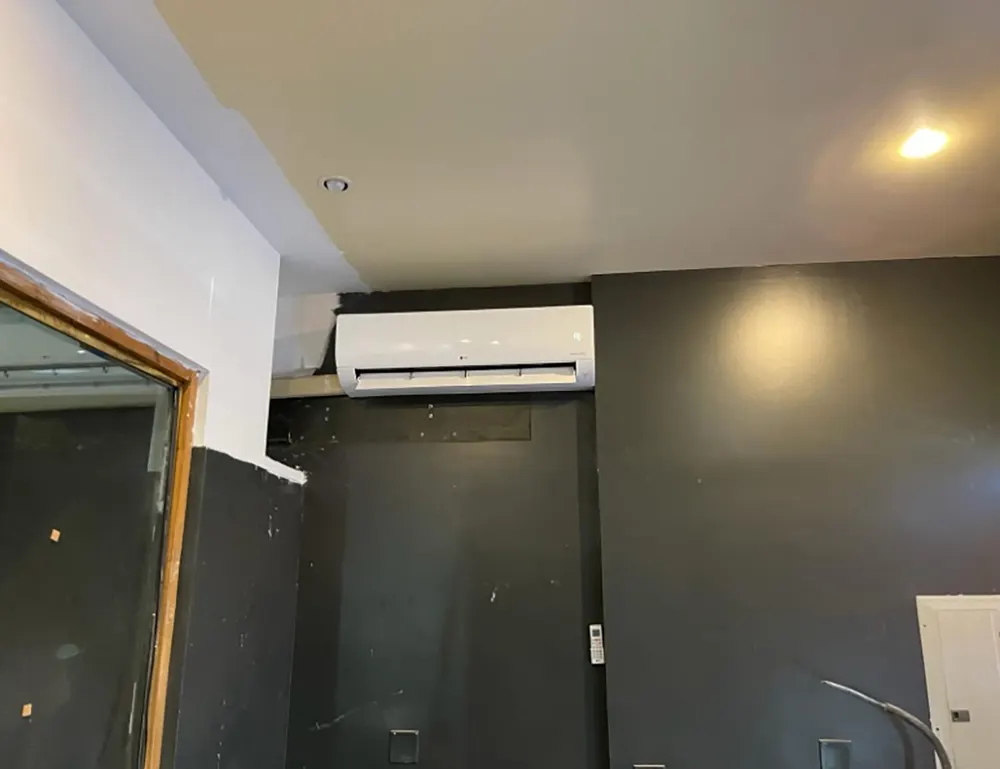
The direct answer: the deciding factor is ductwork. If your home has usable ducts, replacing a central system is straightforward: $6,500–$10,500 for a new 2–3.5 ton high-efficiency unit. If it doesn't — the reality in most NYC row houses and prewar buildings — building ducts adds $25–$60 per linear foot plus soffits, lost ceiling height, and opened walls. That's why ductless mini-splits, at $4,000–$7,500 per zone installed, have become the default answer for NYC homes.
These are our published ranges — the full price list is here. You always get a flat quote before work starts.
No ducts, no demolition. A line set needs a 3-inch opening, not opened ceilings. Installation is typically a day or two per zone, not a renovation. Lower running costs — mini-splits draw a fraction of the power of comparable ducted systems, commonly cutting cooling bills 30–40% over a NYC summer. Room-by-room control — each zone has its own thermostat, so the top-floor bedroom that bakes every July finally gets its own setting. And modern units are heat pumps: they replace both your window ACs and take load off old radiators in winter.
Central wins when the infrastructure already exists: detached and semi-detached homes with ducted forced-air heating (common in parts of Staten Island and Queens), gut renovations where ducts can be planned into the design, and owners who want fully invisible cooling with a single thermostat. If your ducts are in place, a central replacement is the cleaner, often cheaper path — and if your current system is past its lifespan, it's the natural moment to upgrade efficiency.
The difference between a mini-split that lasts 15 years and one that fails at 6 is installation quality: correctly sized equipment for the room (not guesswork), a properly flared and pressure-tested line set, insulated refrigerant lines, a real condensate drain plan, and a documented performance test at the end. That's what our installation price includes — done by licensed and insured technicians and backed by a 1-year labor warranty. We're certified across every major brand: Mitsubishi, Fujitsu, LG, GE, Midea.
Not sure which way your building leans? Send us a floor plan or a few photos and we'll tell you honestly which system fits — and roughly where the price lands — before anyone visits.
Can one outdoor unit really serve five rooms? Yes — multi-zone condensers are designed for 3–5 indoor heads. Beyond that, a second outdoor unit usually makes more sense.
Do I need building or landlord approval? In co-ops, condos and rentals, usually yes — the outdoor unit placement is the sensitive part. We've worked with NYC building requirements for 30 years and can help with the paperwork conversation.
What about window units? They're cheap upfront and expensive forever: inefficient, loud, a security compromise, and blocked windows. A mini-split typically pays back the difference in energy savings and resale value.